Vintage handbags are more than ordinary fashion accessories. They bring character, unique designs, and a connection to fashion history into modern wardrobes. From structured leather purses to delicate beaded evening bags, vintage styles offer something different from many contemporary accessories. Their distinctive materials, shapes, and craftsmanship make them appealing to collectors, fashion enthusiasts, and people exploring secondhand shopping.
However, buying a vintage handbag requires careful consideration of its condition, authenticity, material, and everyday usefulness. Some older bags remain practical for regular wear, while others are better suited to occasional outings. This vintage handbag guide explains popular styles, identification tips, buying considerations, outfit ideas, and maintenance techniques to help you confidently explore vintage fashion.
What Is a Vintage Handbag?
A vintage handbag is generally a bag produced during an earlier fashion period, commonly at least 20 years ago. However, there is no universally accepted definition of vintage across all fashion markets. Some sellers use the term for relatively recent secondhand accessories. Understanding production dates, design characteristics, and materials helps distinguish genuinely older handbags from modern vintage-inspired designs.
Vintage handbags reflect the fashion preferences, manufacturing techniques, and social influences of their original periods. Older bags may feature metal clasps, structured frames, decorative embroidery, or distinctive leather finishes. Their design characteristics can provide clues about when they were made. However, similar styles have been reproduced over time, so appearance alone cannot always confirm age.
Many people choose vintage handbags because they offer unusual details and opportunities for personal expression. Others appreciate purchasing existing accessories instead of buying newly manufactured products. However, older construction does not automatically guarantee better quality or sustainability. The most worthwhile handbag is one that meets your practical needs, remains in suitable condition, and complements your wardrobe.
How to Identify an Authentic Vintage Handbag
Identifying an authentic vintage handbag begins with examining its overall construction. Look closely at stitching, materials, hardware, lining, and closure mechanisms. Older handbags may display manufacturing details associated with particular fashion periods. However, no single feature proves that a bag is vintage because brands have used different production methods throughout their histories.
Labels, serial numbers, and maker’s marks may provide additional identification clues. Some manufacturers used date codes or distinctive interior labels during certain periods. Researching these features can help establish whether the handbag matches the claimed production era. Nevertheless, counterfeit products may imitate authentic markings, so identification should involve examining several characteristics together.
Condition also provides useful information, although visible wear is not proof of authenticity. Genuine vintage bags may show softened leather, minor hardware scratches, or natural changes in material texture. However, some older bags remain remarkably well preserved. Buyers should avoid assuming that a heavily worn handbag is authentic simply because it looks old or has an unfamiliar design.
Popular Types of Vintage Handbags
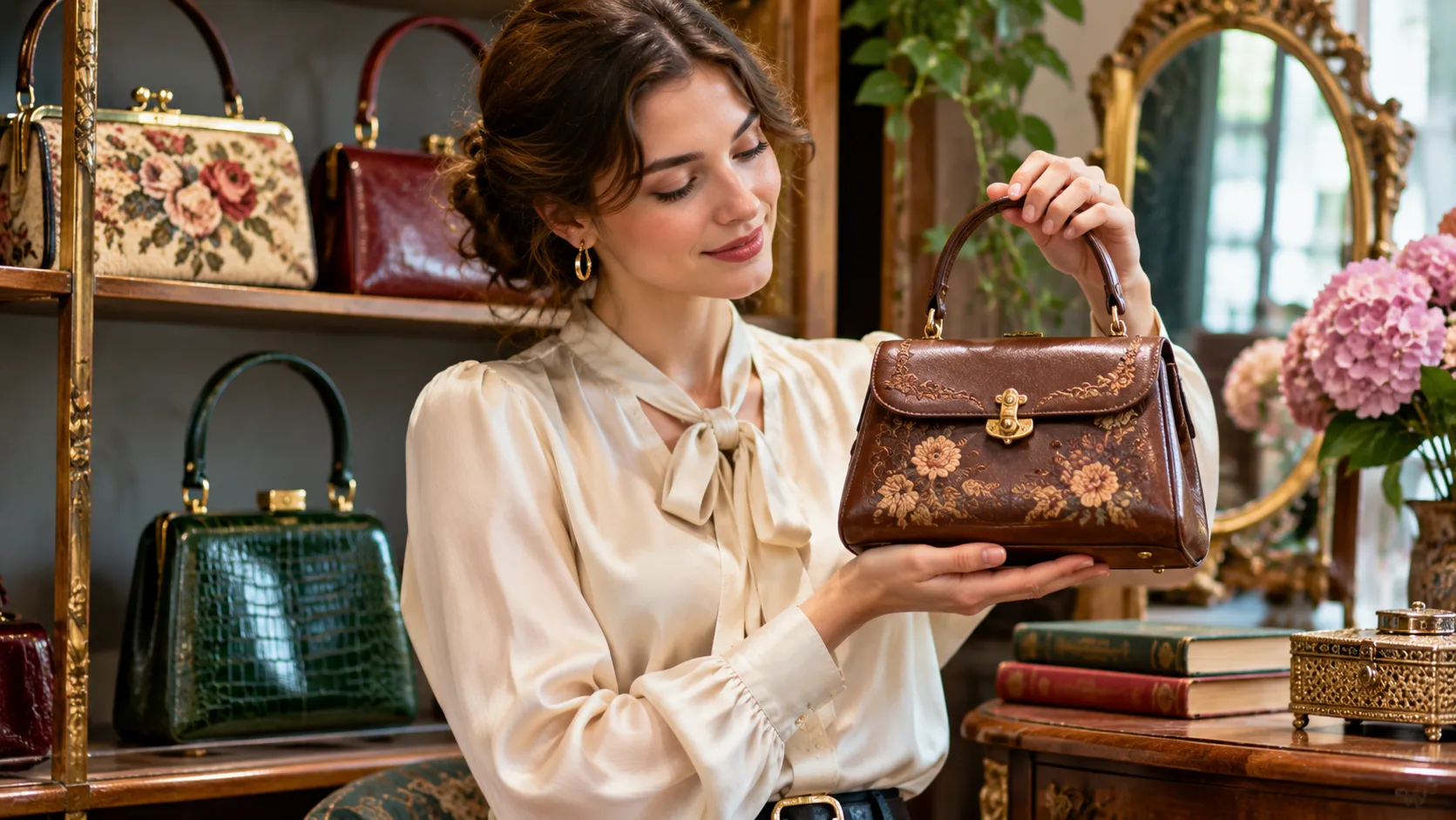
Vintage handbags come in many shapes, each reflecting different fashion preferences and practical needs. Structured top-handle bags are especially recognizable because of their firm silhouettes and defined carrying handles. These designs often feature leather construction and metal closures. Their polished appearance makes them suitable for office clothing, tailored outfits, and occasions requiring a more traditional accessory.
Vintage shoulder bags offer a more relaxed alternative to structured handbags. Many feature adjustable straps, flap closures, and compact compartments for daily essentials. Their practical construction makes them attractive for casual outfits and everyday activities. Depending on the era, these bags may include decorative buckles, contrasting leather panels, or distinctive hardware that adds character.
Evening bags, clutches, and beaded purses represent another important category of vintage accessories. These designs may feature embroidery, sequins, metal frames, or delicate fabrics. They are often smaller than everyday handbags and intended for special occasions. When purchasing decorative vintage styles, checking the condition of beads, clasps, and stitching is especially important.
Vintage Handbag Styles From Different Decades
Handbags from the 1950s often featured structured shapes, short handles, and polished details. Frame bags, boxy purses, and elegant leather designs were popular during this period. Many complemented tailored dresses and coordinated accessories. Their distinctive silhouettes can still work with modern outfits, particularly when combined with simple clothing that allows the handbag to stand out.
The 1960s and 1970s introduced a wide range of handbag styles. Geometric shapes, colorful materials, and compact shoulder bags appeared alongside softer leather designs. During the 1970s, relaxed silhouettes, suede, fringe, and earthy colors became especially noticeable. These vintage handbag trends continue to influence contemporary fashion, particularly casual and bohemian-inspired outfit combinations.
The 1980s and 1990s brought additional variety through bold hardware, recognizable brand details, and streamlined shoulder bags. Some designs featured prominent logos, while others emphasized minimalist shapes and practical compartments. These accessories remain popular in secondhand fashion markets. Understanding decade-specific trends helps shoppers identify styles they enjoy without relying entirely on current fashion popularity.
Vintage Leather Handbags: What to Check Before Buying
Leather is one of the most common materials found in vintage handbags. Older leather bags may develop a natural patina, giving them a distinctive appearance over time. However, leather condition varies considerably depending on storage, maintenance, and previous use. Buyers should inspect the entire surface for cracking, peeling finishes, dryness, and damage before purchasing.
Handles and straps deserve particular attention because they experience repeated stress during use. Examine attachment points, stitching, and areas where the leather bends. Weak seams or severely damaged straps may require professional repair. A handbag with an attractive exterior may still be impractical if its carrying components are no longer secure.
The interior should also be examined carefully. Look for torn lining, unpleasant odors, loose stitching, or signs of moisture damage. Some older synthetic linings and coatings may become sticky or deteriorate with age. Repairing these problems can be expensive, depending on the handbag’s construction. Understanding the condition before purchase helps avoid unexpected restoration costs.
Designer Vintage Handbags and Authentication
Designer vintage handbags attract interest because of their distinctive craftsmanship, historical designs, and recognizable branding. Some collectors seek discontinued styles or earlier versions of popular handbag collections. However, designer labels alone do not establish quality or authenticity. Buyers should evaluate the specific bag, its history, and its condition rather than assuming every branded vintage accessory is valuable.
Authentication can involve examining logos, stitching patterns, materials, hardware, date codes, and manufacturing details. These features vary by brand and production period. A detail considered normal for one era may be unusual for another. Professional authentication services may provide additional guidance when purchasing expensive bags, although authentication methods and guarantees differ between providers.
Documentation can also support a purchase decision. Original receipts, service records, and credible ownership history may be useful, but their absence does not automatically mean a bag is counterfeit. Likewise, packaging and authenticity cards can be reproduced. Buyers should prioritize reputable sellers, clear photographs, and reliable return policies when evaluating designer vintage handbags.
Where to Buy Vintage Handbags
Vintage handbags can be found in secondhand fashion stores, specialized vintage boutiques, and established resale platforms. Physical stores provide opportunities to examine materials, closures, and overall condition before purchasing. Buyers can also compare different styles in person. However, selection and pricing vary depending on location, store specialization, and the availability of older accessories.
Online marketplaces provide access to a wider range of vintage handbags from different periods. Detailed photographs and accurate descriptions are important when evaluating products remotely. Look for images showing the front, back, interior, handles, corners, and hardware. Sellers should clearly disclose damage, repairs, and any uncertainty about the bag’s age or authenticity.
When shopping online, review seller ratings, payment protections, shipping conditions, and return policies. Ask questions before purchasing if important details are missing. Be cautious about unusually low prices for highly sought-after designer bags. Comparing similar products and checking available authentication information can help reduce the risk of buying an unsuitable or misrepresented handbag.
How to Choose the Right Vintage Handbag
Choosing a vintage handbag begins with understanding how you intend to use it. A compact evening purse may work beautifully for formal events but provide limited everyday storage. A larger leather shoulder bag may be more practical for work or casual outings. Consider carrying requirements, clothing preferences, and the frequency of use before selecting a particular design.
Color also influences a vintage handbag’s versatility. Black, brown, tan, burgundy, and cream can complement many wardrobe combinations. More colorful designs may work well as statement accessories when paired with simple clothing. Instead of choosing a bag only because it reflects a particular decade, consider whether its colors and shape suit your existing wardrobe.
Comfort and construction should remain important buying considerations. Check whether handles fit comfortably, straps adjust properly, and closures function securely. Some older bags may be heavier than modern alternatives because of their materials or hardware. A practical vintage handbag should offer an enjoyable carrying experience alongside its historical or decorative appeal.
How to Style Vintage Handbags With Modern Outfits
Vintage handbags can complement contemporary clothing without making an outfit appear like a historical costume. A structured vintage leather bag paired with straight-leg jeans and a white shirt creates a balanced everyday look. The handbag introduces character while the clothing keeps the combination simple. Loafers or sneakers can complete the outfit depending on the occasion.
For a more polished appearance, combine a vintage top-handle bag with tailored trousers and a lightweight blouse. Neutral clothing allows decorative hardware or an unusual handbag silhouette to become more noticeable. This approach works well for smart-casual settings. Mixing older accessories with modern wardrobe essentials can create an interesting contrast between traditional and contemporary design.
Vintage shoulder bags also work with relaxed clothing such as denim skirts, knitwear, and casual dresses. A compact 1990s-style bag can complement simple monochromatic outfits. Choosing one prominent vintage accessory often makes styling easier than combining several bold retro pieces. The goal is to create a comfortable outfit that reflects personal preferences rather than copying an entire historical fashion period.
Vintage Handbag Outfit Ideas for Different Occasions
For everyday activities, a vintage crossbody or shoulder bag can complement comfortable jeans, a cotton shirt, and flat shoes. Neutral leather designs are particularly versatile because they work with many clothing combinations. A secure closure and manageable size make the bag practical for shopping or casual outings. Choosing simple accessories helps maintain a relaxed appearance.
Office outfits can benefit from structured vintage handbags with clean lines and understated hardware. A dark leather top-handle bag paired with tailored trousers, a blazer, and loafers creates a professional combination. The handbag adds visual interest without overwhelming the clothing. Before using an older bag for work, check whether it can safely carry your usual belongings.
For evening occasions, vintage clutches and beaded handbags provide decorative alternatives to modern accessories. A small embroidered purse can complement a simple black dress or elegant matching set. Metallic details may coordinate with jewelry or footwear. However, delicate vintage evening bags should not be overloaded because older stitching and decorative components may be vulnerable to damage.
Vintage Handbags vs. Modern Handbags
Vintage and modern handbags differ in their design influences, materials, and manufacturing methods. Older handbags may feature discontinued shapes, unusual hardware, or construction techniques associated with their original production periods. Modern bags often incorporate contemporary storage features and materials. Neither category is automatically superior because quality varies widely between manufacturers and individual products.
Vintage handbags may appeal to people seeking distinctive accessories that are less commonly available in stores. Their secondhand nature can also support the reuse of existing products. However, repairs and maintenance may be necessary to keep them functional. Modern handbags generally offer easier access to current warranties, replacement components, and standardized product information.
The better choice depends on personal preferences and practical needs. Someone who values unusual design and fashion history may prefer a carefully selected vintage bag. Another person may prioritize lightweight materials, secure compartments, and easy maintenance. Comparing condition, price, functionality, and expected longevity provides a more useful basis for choosing than age alone.
How Much Should You Spend on a Vintage Handbag?
Vintage handbag prices vary according to brand, condition, materials, rarity, and market demand. Unbranded secondhand bags may be relatively affordable, while collectible designer pieces can cost considerably more. Age alone does not determine value. Some older handbags have limited resale demand despite attractive designs, while certain discontinued models attract strong collector interest.
Before shopping, establish a comfortable spending limit that includes potential cleaning or repair expenses. Compare similar handbags rather than relying on a seller’s description of rarity. Examine material quality, construction, and the availability of replacement parts. A lower purchase price may not represent good value if the bag requires extensive restoration before it can be used.
Buyers should also avoid treating every vintage designer handbag as an investment. Resale prices can change with fashion trends, condition, and buyer demand. Authentication, transaction fees, and maintenance costs may further affect financial outcomes. Choosing a handbag primarily for its appearance and practical usefulness can make the purchase more satisfying regardless of future resale value.
Common Vintage Handbag Buying Mistakes
One common mistake is purchasing a vintage handbag without carefully examining its condition. Attractive photographs may conceal worn corners, damaged stitching, or deteriorating interior materials. Buyers should request detailed images and descriptions before committing to a purchase. Checking both appearance and functionality helps prevent disappointment when the bag arrives.
Another mistake involves assuming that every vintage handbag is authentic or valuable. Some products are modern reproductions, while others may have been incorrectly dated. Designer accessories can also be counterfeited. Researching materials, production details, and seller credibility is important, especially when purchasing expensive items from unfamiliar sources.
Ignoring practical carrying needs can also result in an unsuitable purchase. A small decorative handbag may look attractive but fail to accommodate daily essentials. Heavy hardware or short handles may reduce comfort during regular use. Choosing a bag based on both design and functionality helps ensure that it becomes a useful wardrobe accessory rather than an unused purchase.
How to Clean a Vintage Handbag Safely
Cleaning a vintage handbag requires careful attention to its materials and condition. Begin by removing loose dust with a soft, dry cloth or suitable brush. Avoid applying water or cleaning products before identifying the material. Older leather, delicate fabrics, and decorative finishes may react differently to moisture and chemicals, making unsuitable cleaning methods particularly risky.
For leather handbags, use products specifically recommended for the material and finish. Test any treatment on a small, inconspicuous area when appropriate. Suede and delicate textiles often require different cleaning techniques. Avoid soaking vintage bags or using strong household detergents because these methods may cause discoloration, stiffness, or permanent damage.
Professional cleaning may be worthwhile for valuable or fragile handbags. Specialists experienced with vintage materials can assess whether stains, odors, or surface damage can be treated safely. However, some deterioration cannot be completely reversed. Gentle maintenance and careful handling are generally more effective than attempting aggressive restoration without understanding the material.
How to Store and Preserve Vintage Handbags
Proper storage helps protect vintage handbags from unnecessary wear and environmental damage. Keep bags in a cool, dry location away from prolonged direct sunlight. Excessive humidity can encourage mold growth, while very dry conditions may affect certain leather materials. Maintaining a stable storage environment helps preserve the bag’s appearance and structural integrity.
Structured handbags may benefit from gentle internal support to maintain their shape. Clean, acid-free tissue paper can be useful for this purpose. Avoid overstuffing because excessive pressure may stretch seams or distort the original silhouette. Breathable dust covers help reduce dust accumulation while allowing appropriate air circulation around stored accessories.
Metal chains, buckles, and decorative components should be positioned carefully to prevent scratches. Avoid hanging heavy vintage bags by fragile straps for extended periods. Inspect stored handbags occasionally for changes in texture, odor, or condition. Regular checks can help identify emerging problems before they become more difficult to address.
Are Vintage Handbags Worth Buying?
Vintage handbags can be worthwhile for people who appreciate distinctive fashion accessories and secondhand shopping. They offer opportunities to explore designs that may no longer be available through conventional retailers. Some older bags also feature craftsmanship or decorative details that are difficult to find in contemporary collections. Their value depends on individual preferences and practical usefulness.
Buying secondhand may reduce demand for newly manufactured accessories, although environmental benefits depend on purchasing behavior, transportation, and product longevity. A well-maintained vintage bag that receives regular use can be a practical addition to a wardrobe. However, buying numerous unnecessary accessories does not automatically create a more sustainable shopping habit.
The best vintage handbag purchase combines suitable condition, reasonable pricing, and personal enjoyment. Researching authenticity and understanding maintenance requirements helps reduce financial and practical risks. Buyers should choose bags they expect to use rather than relying exclusively on trends or potential resale value. Thoughtful selection makes vintage shopping more rewarding and manageable.
Conclusion
Vintage handbags offer an interesting combination of fashion history, distinctive design, and practical accessorizing possibilities. From structured leather purses to decorative evening bags, older styles can complement many modern outfits. However, not every vintage handbag is equally durable or suitable for everyday use. Understanding materials, construction, and authenticity helps buyers make informed decisions.
Before purchasing a vintage handbag, carefully inspect its condition, compare prices, and consider potential maintenance needs. Reliable sellers, clear product descriptions, and appropriate authentication methods can reduce unnecessary risks. Choosing a bag that matches your wardrobe and carrying requirements is also important. A beautiful accessory provides greater value when it remains comfortable and functional.
Whether you are exploring vintage fashion for the first time or expanding an existing collection, patience and research can improve your shopping experience. Begin with practical styles that complement clothing you already own. Learn appropriate cleaning and storage techniques to protect older materials. With thoughtful care, a well-chosen vintage handbag can remain an attractive wardrobe accessory for many years.
Frequently Asked Questions
How old does a handbag have to be to be considered vintage?
Vintage handbags are commonly considered at least 20 years old, although definitions vary between sellers and collectors. Antique handbags are generally much older, often exceeding 100 years.
How can I tell if a vintage handbag is authentic?
Examine its materials, stitching, hardware, labels, and production details. Compare these features with reliable information about the manufacturer and era. Professional authentication may be useful for expensive designer handbags.
Are vintage handbags better quality than modern bags?
Not necessarily. Some vintage handbags feature excellent craftsmanship, but quality varies between brands, materials, and production periods. Condition and construction are more useful indicators than age alone.
Can you use a vintage handbag every day?
Yes, many vintage handbags are suitable for everyday use when their handles, stitching, lining, and closures remain strong. Delicate or heavily worn designs may be better reserved for occasional outings.
What is the best way to store vintage handbags?
Store vintage handbags in breathable dust covers in a cool, dry location. Support structured shapes with suitable tissue paper and avoid excessive sunlight, moisture, and pressure on delicate materials.